
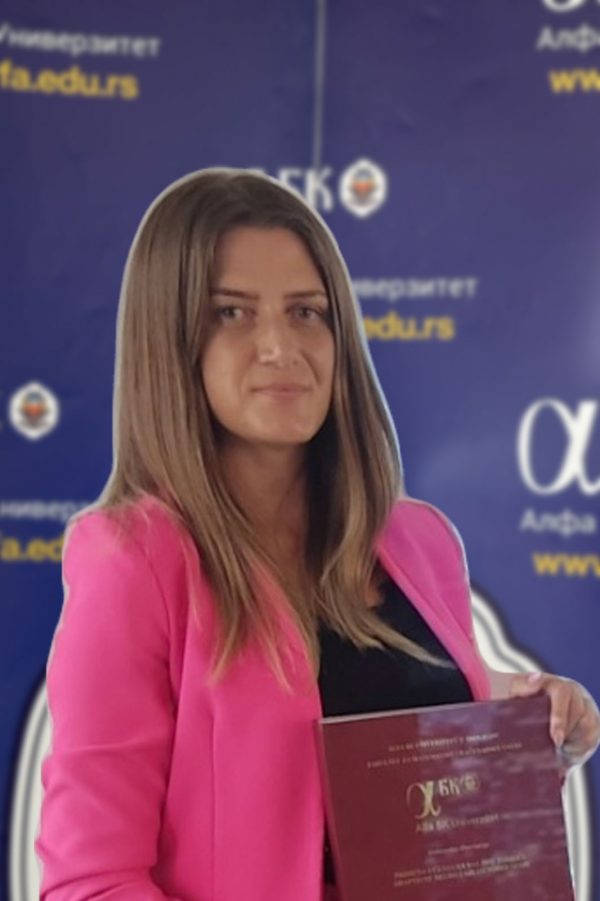
Jelena Stojanović
Repozitorijum radova
Bibliografske reference
Publikacije i radovi autora prikazani su u kompaktnim karticama, grupisani po godinama.
Risk Management Innovations through Neural Network Integration in Automated Boiler Combustion Systems
M33Journal of Soft Computing and Decision Analytics
Risk Management Innovations through Neural Network Integration in Automated Boiler Combustion Systems
Popovic,S., Djukic Popovic,S., Denic,N., Djukic,D., Stojanovic,J.,
2025
Vol. 3 No. 1
—
—
—
—
In the early decades of the twenty-first century, the application of artificial intelligence has been expanding across all sectors of society, including industrial energy systems. This paper emphasizes the significance of integrating artificial neural networks into boilers with automatic firing, as part of a research project currently in its fifth year of experimental validation. The implementation of neural networks in such systems has demonstrated promising results in the domain of risk management, particularly through the prediction of system malfunctions and their proactive elimination via software interventions. The application of AI-based solutions in boiler control not only contributes to the reduction of environmental impact but also enhances operational safety by preventing accidents that may endanger human health and cause material losses.
Neural networks , Risk management, Automatic boilers, Combustion optimization
M33
The Importance of Implementing Artificial Neural Networks in Boiler Automation Systems
M3310th Virtual International Conference on Science, Technology and Management in Energy
The Importance of Implementing Artificial Neural Networks in Boiler Automation Systems
Popovic,S., Denic,N., Stojanovic,J., Djukic,D., Djukic Popovic,S.,
2025
—
—
978-86-82602-05-7
10.5281/zenodo.14735501
—
—
The twenty-first century brings significant energy challenges such as the scarcity of fossil fuels, the reduction in the number of nuclear power plants, and insufficient capacities of power plants that operate on the principle of renewable energy sources. In addition to this, ecological problems that we have been facing for more than a century are emerging, with global warming, the greenhouse effect, and the extensive devastated areas resulting from the large amounts of ash being particularly noteworthy. Increasingly frequent military conflicts disrupt the uninterrupted flow of energy resources among countries, leading to a natural gas deficit. This problem especially affects the European continent, which must turn to renewable energy sources such as biomass. In order to reduce pollution, increase the utilization of existing fuels, and maintain the quality and comfort of life during the heating season, a solution must be found so that with existing reserves and the production of biomass we can achieve the same or better results. This paper presents an example of the application of artificial neural networks in small capacity boilers and the potential for energy savings. Savings not only yield economic results but also visibly reduce small particles PM 2.5 and PM 10, while also decreasing the emission of harmful carbon and sulfur gases.
artificial neural networks, boiler automation systems, mathematical models, optimization of combustion parameters
M33
Application of artificial intelligence in education in the function of raising entrepreneurial competence
M23SCIENCE International Journal
Application of artificial intelligence in education in the function of raising entrepreneurial competence
Stojanović , J., Stojanović , K., Denić , N., & Milić , M.
2024
Vol. 3 No. 3
—
—
—
—
In the time we live in, the digital competencies of employees represent an important factor in achieving positive business results. In this sense, the integration and application of modern technologies and artificial intelligence in the learning and teaching process is of crucial importance in the information society of the 21st century. It is precisely the emergence of artificial intelligence and the rapid development of ICT that constantly affects the challenges of life and work, and therefore the success of students through the education system as members of a society in which ICT is an indispensable part. It is known that the development of information technologies has initiated improvement in various areas such as: finance, business, health, education, and the entire labour market. In this research work, it will be evolved to a new review of the relevant literature and research in practice, how artificial intelligence can influence the outcome of the educational process and increase the entrepreneurial competencies of employees. In this direction, this research will present a research study of questionnaires applied for analysis and obtaining data on training and testing for statistical evaluation. Statistical analysis will be based on the application of artificial intelligence, i.e., Adaptive Neuro-Fuzzy Inference Systems (ANFIS). In this research, we use the ANFIS methodology to determine the most important factors of student success in teaching. Based on the review of the relevant literature, it is evident that there is not enough research that would deal with the analysis of the relationship between students' success in mathematics and the factors that influence it. This is confirmed by the research results, which indicate that the quality of students' work in practice is influenced by several different factors: educational technology, teacher competence, teacher motivation, etc. This type of research fills the gap in the lack of research to determine which key factors have the strongest impact on student success. The research results of this paper confirm that the application of artificial intelligence in teaching through educational software, among other things, can be a key success factor for improving teaching. In this sense, the effects of the application of artificial intelligence and specific educational software and the effects they have on student motivation, that is, the interest and self-confidence of all factors of the educational process, have been identified. The obtained results indicate the benefits and advantages that educational institutions can have from the introduction of educational technologies in teaching. In this way, technology has become not only useful, but also a necessary instrument for purposeful action in society. The results of the research show that artificial intelligence through Neuro-fuzzy architecture was created with the aim of overcoming complex and complex problems, it has its application in situations that are mostly impossible to describe analytically. Once learned ways to overcome complex problems, they can be applied after schooling in order to contribute to raising the entrepreneurial competencies of pupils and students, which will lead to the improvement and modernization of business and help you stay relevant in the labour market.
Education, artificial intelligence, business intelligence
M23
Paradigms of application of business data analysis And business intelligence in public administration And local self-government
M33ALFATECH
Paradigms of application of business data analysis And business intelligence in public administration And local self-government
Stojanović, K., Denić,N., Stojanović, J.
2024
—
—
978-86-6461-074-2
10.5281/zenodo.12615233
—
This research paper will present the concept of data collection that provides the possibility of applying analytical methods, including business intelligence and methods, techniques and tools for processing large amounts of business data. The importance and amount of data in all areas, including municipalities, is growing year by year. In the past, municipalities have lagged behind the private sector in the area of business intelligence, but in recent years progress has been felt in this area. Currently, municipalities are still exploring and learning what solutions are available for smart cities and communities. As determined by European and national strategies in this area, education in the field of data will be key, because as the work shows, there is still a lot of room for improvement. In any case, the work will contribute to a better understanding of the importance of smart cities and municipalities and business intelligence, because it was presented to all holders of the municipal budget and will be used as a basis for further activities of the Municipality. municipality in this area. Last, but not least, policies in this area, both European and Slovenian, aim at increasing digitization. We are in a period when so-called smart cities, smart villages, smart municipalities are being born. Business intelligence is also key in this light, as it enables smart communities to make better decisions and thus achieve their goals more easily. It could be said that business intelligence gives intelligence to smart municipalities. I estimate that in the future, despite the current lack of knowledge in the field of data, municipalities will increasingly be digitized, digitally transformed and that there will be more and more solutions and good practices in this area. The municipality will follow the goals of digital transformation and the goals of the Digital EU Agenda and will definitely achieve them by 2030, which means that with the help of business intelligence, it could be transformed into a smart municipality. However, it is difficult for me to estimate what the level of transformation will be, which I could explore in further analyses.
Data analysis, business intelligence, digitization
M33
Paradigms of Digital Competencies of Students in Higher Education in the Age of COVID-19
M3310th International Scientific Conference Technics, Informatics and Education
Paradigms of Digital Competencies of Students in Higher Education in the Age of COVID-19
Bulut Bogdanović,I., Denić, N., Stojanović,J., Stojanović,K. and Milić, M.
2024
—
—
978-86-7776-276-6
10.46793/TIE24.462BB
462-469
This qualitative study aims to investigate the degree of digital competences of students at the university level and their readiness for the modern digital surrounding context. In this sense, the challenges in higher education that are a consequence of the pandemic, COVID 19 will be presented, focusing mainly on the increased use of ICT in the learning process among students. By reviewing the representative literature in the field of digital competences, the existing models and programs for the development of digital competences, i.e. the factors that influence their development, will be evolved. The aforementioned activities will be undertaken with the aim of proposing recommendations for the improvement of educational, i.e. curricula, as well as strategies for the development of digital competences in educational institutions, to investigate students’ perceptions of their digital abilities and needs, as well as to propose recommendations for promotion. For the purposes of the work, research will be conducted through semi-structured interviews, where through cooperation with students and professors We will try to answer the research questions. The results of existing research confirm the hypotheses of this work that based on predictions, there may be significant differences in the level of digital competences among students of different study programs, as well as depending on the availability and use of technology in the educational process. In this direction, it is expected that this research will provide a deep insight into the level of digital competences of students, which will enable a better understanding of their needs and challenges in the modern educational context. We hope that the results of this work will serve as a basis for the development of effective strategies and programs for the improvement of students’ digital competencies. The results of the analysis will also show to what extent the daily use of ICT has burdened students and teachers or made their work easier.
Educational software; Digital literacy; Electronic education, Digital competences, COVID 19
M33
Possibilities of applying iot in the municipality of Gračanica
M33ALFATECH
Possibilities of applying iot in the municipality of Gračanica
Denić,N., Stojanović,K.,Stojanović, J.
2024
—
—
978-86-6461-070-4
10.5281/zenodo.12614746
—
The purpose of the research of this work is to investigate the possibilities of applying modern technologies in solving current problems in rapidly growing environments such as the municipality of Gračanica. Based on a studious analysis of the relevant literature, the concrete contribution to the understanding of the role and importance of IoT will be investigated and thus increase its use for the needs of so-called smart cities, i.e. municipalities, and at the same time answer the question of whether we can define IoT as one of the key elements of smart cities, municipalities or cities that use digital and information communication technologies (hereinafter ICT) for more efficient operation of traditional networks, services and systems for the benefit of residents and the economy are called smart cities or communities. Smart cities and municipalities are a growing paradigm that has emerged from the convergence of many technologies such as the Internet of Things, big data and real-time systems. The purpose of smart cities and municipalities is to better coordinate resources and processes for quick response and efficient work. One of the most important priorities of the neighbouring countries is the digital transformation of public administration and society in general. It is about combining the innovative use of digital technologies, activities and processes. The digital transformation of municipalities and cities is the most pervasive step and includes broad changes, the result of which is the use of new business models through the implementation of smart services with the aim of creating and achieving greater added value. The result of the digital transformation of cities and communities are smart cities and municipalities. Many areas in a city or municipality can become "smarter" with the help of IoT, that is, they offer opportunities for automatic real-time monitoring to obtain data and turn it into meaningful and useful information. Research results indicate that this could significantly improve the effective control and management of vital functions in cities, for example property, education, traffic and smart parking management, water management, public health, environmental monitoring, energy efficiency, waste managementand utility services in order to make more efficient use of resources. and improving the lives of citizens of the municipal administration of Gračanica.
IoT, smart cities, digitization
M33
The Impact of Digital Literacy and the Application of Educational Software on the Quality of Teaching
M3310th International Scientific Conference Technics, Informatics and Education
The Impact of Digital Literacy and the Application of Educational Software on the Quality of Teaching
Nebojša Denić , Snežana Gavrilović , Jelena Stojanović , Kostadinka Stojanović , Momir Milić
2024
—
—
—
10.46793/TIE24.179D
str. 179-184
In this paper, the possibilities of applying educational software and the influence of digital literacy in the function of electronic teaching are investigated. For the purposes of the work, the latest relevant literature in the country and abroad in this current field was researched. The subject of research of this paper will be a comparative analysis of educational software that is applied in our environment with a special emphasis on educational institutions in the area of Kosovo and Metohija and the Toplic district. Based on the conducted research, the paper will present an overview of the most popular software that is used today in the teaching process. The goal of the research is to determine teachers’ attitudes about the application of educational software in teaching, to investigate the effects and possibilities of improving teaching, highlighting the positive effects that can be achieved by their application in primary, secondary and high schools. The results of the research show that the use in subject teaching resulted in an increase in the quantity and quality of students’ knowledge compared to the traditional form of teaching, as well as that students generally have a positive attitude towards the use of educational software in teaching. Standard methods of statistical processing will be used for data processing.
Educational software; Digital literacy; Electronic education
M33
Transformation of e-administration into digital Administration and smart cities and villages
M33ALFATECH Proceedings of Conference
Transformation of e-administration into digital Administration and smart cities and villages
Stojanovic,J., Denić, N., Stojanović, K.,
2024
—
—
978-86-6461-074-2
10.5281/zenodo.12615247
—
This research paper will present the concept of data collection that provides the possibility of applying analytical methods, including business intelligence and methods, techniques and tools for processing large amounts of business data. The importance and amount of data in all areas, including municipalities, is growing year by year. In the past, municipalities have lagged behind the private sector in the area of business intelligence, but in recent years progress has been felt in this area. Currently, municipalities are still exploring and learning what solutions are available for smart cities and communities. As determined by European and national strategies in this area, education in the field of data will be key, because as the work shows, there is still a lot of room for improvement. In any case, the work will contribute to a better understanding of the importance of smart cities and municipalities and business intelligence, because it was presented to all holders of the municipal budget and will be used as a basis for further activities of the Municipality. municipality in this area. Last, but not least, policies in this area, both European and Slovenian, aim at increasing digitization. We are in a period when so-called smart cities, smart villages, smart municipalities are being born. Business intelligence is also key in this light, as it enables smart communities to make better decisions and thus achieve their goals more easily. It could be said that business intelligence gives intelligence to smart municipalities. I estimate that in the future, despite the current lack of knowledge in the field of data, municipalities will increasingly be digitized,digitally transformed and that there will be more and more solutions and good practices in this area. The municipality will follow the goals of digital transformation and the goals of the Digital EU Agenda and will definitely achieve them by 2030, which means that with the help of business intelligence, it could be transformed into a smart municipality. However, it is difficult for me to estimate what the level of transformation will be, which I could explore in further analyses.
Data analysis, business intelligence, digitization
M33
Adaptive neuro fuzzy estimation of the most influential speckle noise distributions in color images for denoising performance prediction
M21Multimedia Tools and Applications
Adaptive neuro fuzzy estimation of the most influential speckle noise distributions in color images for denoising performance prediction
Nebojša Denić, Zoran Nešić, Dragan Zlatković, Bojan Stojiljković, Jelena Stojanović, Dalibor Petković
2023
—
—
—
10.1007/s11042-023-14633-5
—
This research paper analyzes the speckle noise distributions in images for denoising performance prediction through the prism of spatial domain. The values at the maximum, minimum and middle of spectrum in spatial domain are taken as reference values. All obtained results give a better overview of the “nature” of the digital images in comparison to the theoretical definitions of noises and images as digital signals. Therefore, analyses of the noises in the 2D spectrum give good recommendations for improvement of the filters. The main aim in this study is to investigate which speckle noise distributions in images has the strongest influence for denoising performance prediction. The clean images are available and we adopt it for evaluating our network. In our experiments, Peak Signal to Noise Ratio (PSNR), normalized color difference (NCD), and feature similarity index for color image quality assessment (FSIMc), are used to measure denoising performance. is selected as the evaluation index of the image. Studies on speckle noise distributions in images show that such distribution do have certain disciplines. ALOHA filter is the most influential for the denoising performance prediction.
—
M21
Digital competencies of teachers in the function of ict Application in the teaching process
M3313th International Scientific Conference Science and Higher Education in Function of Sustainable Development – SED 2023
Digital competencies of teachers in the function of ict Application in the teaching process
Jelena Stojanović, Nebojša Denić, Kostadinka Stojanović,
2023
—
—
—
—
—
This paper was written with the intention of analyzing and considering the possible effects of ICT application in education, through paradigms of ICT application in teaching, as well as through possible aspects of distance learning application using artificial intelligence methods and tools. Through the attitudes of students and teachers on the application of e-learning, we will investigate the influence of teacher competence and continuous professional development on learning effects and educational goals, as well as the advantages and disadvantages of e-learning platforms. One of the goals is to determine the attitude of teachers towards the use of ICT in teaching and the learning process. Teachers' attitudes towards the use of technology in school are influenced by: available and easy-to-use digital resources, incentives for change and support from colleagues and school management, clear and comprehensible school and national policy and a background in formal computer training.
distance learning, electronic learning, teacher competencies, ICT in teaching
M33
Prediction of the Factors Affecting the Permanence of Knowledge in Mathematics Using Soft Computing
M33Proceedings
Prediction of the Factors Affecting the Permanence of Knowledge in Mathematics Using Soft Computing
Snežana Gavrilović, Jelena Stojanović, Nebojša Denić
2023
Volume 85
—
—
—
In this scientific research work, the possibilities of applying artificial intelligence of neural networks, i.e., Adaptive Neuro-Fuzzy Inference System (ANFIS) methodology will be presented and explored as a support in teaching mathematics in predicting the durability of knowledge. The results of the research show that it is through the use of these sophisticated technologies that students’ achievements in mathematics can be improved, and that research in this direction is very much needed.
mathematics; student; scientific literacy; knowledge; ANFIS methodology
M33
Adaptive neuro fuzzy selection of important factors for prediction of plasmons in silver nanorods
M22Applied Optics
Adaptive neuro fuzzy selection of important factors for prediction of plasmons in silver nanorods
Dragan M. Zlatkovic ; Dalibor Petković ; Mohamed Amine Khadimallah; Yan Cao; Nebojsa Denic ; Vuk Vujovic; Jelena Stojanovic
2022.
vol. 61
1559-128X
—
1559-128X
Br. 10 str. 2864-2868
The major goal of this study was to find predictors of plasmon positions in silver nanorod (NR) optical absorption spectra. The goal of this study is to use an adaptive neural fuzzy inference system to identify the various input parameters for longitudinal surface plasmon resonance (LSPR) and transverse surface plasmon resonance (TSP). A seed strategy has been used for preparation of the silver NRs. During the preparation, the seed particles are synthesized in the presence of cetyltrimethylammonium bromide (CTAB). To produce the silver NRs, metal salt (AgNO3) has been added, as well as ascorbic acid (AA) and CTAB. Skillful prediction could play a pivotal role in the plasmon NR production management. The combination of CTAB and the seeds has the largest influence on the TSPR. The combination of CTAB and AA has the largest influence on the LSPR. The study considering different input parameters simultaneously, to the best of our knowledge, is the first on a small scale and should attract great general interest.
—
M22
Application of neuro-fuzzy estimation in prediction of shear bond strength between concrete layers through the efficient laser roughness analyzer
M21OPTICS AND LASER TECHNOLOGY
Application of neuro-fuzzy estimation in prediction of shear bond strength between concrete layers through the efficient laser roughness analyzer
Petković, Dalibor ; Zeng, Jie; Denic, Nebojsa M ; Stevanovic, Vesna; Marzouki, Riadh; El-Arab, Islam Ezz; Stevanovic, Malisa; Stojanovic, Jelena N ; Khadimallah, Mohamed Amine
2022.
vol. 151 str. 108017-108017
0030-3992
—
10.1016/j.optlastec.2022.108017
str. 108017-108017
To ensure the monolithic behavior of reinforced concrete composite parts, the bond strength at the interface between concrete layers cast at various ages must be high. Reinforced concrete composite members include precast beams with cast-in-place slabs, bridge decks strengthened by adding a new concrete layer, and repair and strengthening of existing concrete structural members by adding a new concrete layer. in this study, the shear bond strength (SBS) of reinforcing steel on Portland cement and a hybrid cement including slag and Portland cement activated with sodium carbonate is investigated. The pull-out test was used to determine SBS; also a subsequent test data is evaluated using ANFIS, as well as surface classification utilizing a laser roughness analyzer designed particularly to assess the roughness of the concrete substrate. As a result, this research tried to create an in situ non-destructive approach for assessment of concrete surfaces and its influence on shear bond strength measurement of the concrete layers. All test data is analyzed using an adaptive neural fuzzy inference system (ANFIS) to classify the different input variables for determining the shear bond strength between concrete layers using the mean and maximum surface roughness (SR) height parameters Ra and Rt in X and Y direction. ANFIS was used to optimize the process based on five processing parameters. Skillful prediction could play a pivotal role in the optimal conditions during laser cutting process. Based on results, laser speed is the most influential on the Ra in X and Y direction (RMSE: 0.3255, RMSE: 0.6869, respectively). The most influential parameter on the Rt in X direction is laser power (RMSE: 1.5611), while the most influential parameter on the Rt in Y direction is laser speed (RMSE: 2.0781), resulting that the roughness of the substrate surface highly affects the shear bond strength of concrete interfaces.
Laser cutting process; Surface roughness prediction; Prediction; ANFIS; Shear bond strength; Concrete layers
M21
Appraisal of information and communications technologies on the teaching process by neuro fuzzy logic
M22Computer Applications in Engineering Education
Appraisal of information and communications technologies on the teaching process by neuro fuzzy logic
Y. Cao, Z. M. AlKubaisy, J. Stojanović, N. Denić, D. Petković, D. Zlatković, and A. Zakić
2022
—
1559-128X
—
Br. 10 str. 2864-2864
The use of modern information and communication technologies (ICTs) in the learning process has many advantages, but, as recent research has shown, their introduction into the teaching process is rather slow and complex. The rapid development of ICT has caused many changes in society and, consequently, in the education process. The integration of ICT into the teaching process transforms traditional teaching into new teaching that is ready to respond to the demands and needs of a contemporary learner to increase the quality of education: better student motivation, use of different sources of knowledge, development of functional abilities of students, and the ultimate goal is to increase learning outcomes. For that reason, this article explores the possibilities and ways of introducing GeoGebra's mathematical software in geometry classes and its impact on teaching and understanding of processed material by students. In this study, we analyze the influence of educational software in mathematics lectures. The main goal of educational software is to improve teaching performances and make mathematics attractive for the teaching and learning process as well. Educational software represents a combination of ICT and electronic learning (e-learning). Taking into account the specifics of the application of these technologies in different scientific disciplines, the aim of this article is to analyze the impact of the teachers' scientific field on the effects of the application of these technologies in selected higher education institutions. The research included teachers from 10 faculties and 3 schools of applied studies, who provided answers to 20 survey questions. A questionnaire study was applied to obtain training and testing data for statistical evaluation. The statistical analysis was based on an adaptive neuro-fuzzy inference system (ANFIS). The results confirm that the educational software in mathematics lectures is a very important factor for improvement of the teaching process. The effects of this software on motivation, interest, and confidence of the course's participants were observed. The use of ICTs through the use of GeoGebra will be a new challenge for both teachers and students. An assessment of the motivation and achievement of two groups of students was carried out. The control group and experimental group attended classes in a traditional way and by using ICT, respectively. The results of the research have highlighted the huge advantages of introducing ICT into the teaching process.
—
M22
Optimization of a plastic optical fiber based sensor for dye sensing coupled with an adapted neuro-fuzzy inference system
M22Applied Optics
Optimization of a plastic optical fiber based sensor for dye sensing coupled with an adapted neuro-fuzzy inference system
Dalibor Petkovic, Nebojša Denić, Ivana D. Ilić, Dragan Zlatković, Sinisa Ilić, Nenad Kojić, and Jelena Stojanović
2022.
vol. 61 br. 10 str. 2715-2720
10.1364/ao.451755
—
10.1364/ao.451755
str. 2715-2720
In this study, estimation capacities and optimization of a dye concentration sensing model by an adapted neuro-fuzzy inference system (ANFIS) as well as central composite design coupled with response surface methodology using a plastic optical fiber (POF) based sensor were investigated. Various diameters of POF were used for sensing different concentrations of Remazol Black B (RBB), which acts as a sensing medium of the process. The efficiency of sensing was studied as a function of three independent variables: diameter of POF, concentration of RBB dye, and initial temperature of the solution. First, the independent parameters were fed as inputs to an ANFIS, and the output of the system was the output intensity of dye ratio to output the intensity of distilled water. ANFIS showed that this established model is reliable for a dye concentration sensing process and is mainly influenced by its diameter.
—
M22
Application of distance learning in mathematics through adaptive neuro-fuzzy learning method
M21Computers & Electrical Engineering
Application of distance learning in mathematics through adaptive neuro-fuzzy learning method
Jelena Stojanović, Dalibor Petkovic, Ibrahim M Alarifi, Yan Cao, Nebojsa Denic, Jelena Ilic, Hamid Assilzadeh, Sead Resic, Biljana Petkovic, Afrasyab Khan, Milosav Milickovic,
2021.
Volume 93
—
—
—
The main aim of the study is analyzing of pupils’ knowledge in mathematics by adaptive neuro fuzzy inference system (ANFIS) after implementation of distance learning application or e-learning (electronic learning). Since a large number of faculties and other institutions are increasingly using e-learning, it can be stated that for this purpose the Modular object-oriented dynamic learning environment (Moodle) learning management system (LMS) is mostly used. This paper deals with the analysis of distance learning and the application of Moodle LMS in higher education institutions, taking into account the impact of such education on the quality of teaching and the acquisition of knowledge by students, and the methods teachers use in Serbia. The ANFIS is used to determine which factors are the most important for pupils’ performance in mathematics. The results show that the main influence on the pupils’ performance is their prior knowledge. The prior knowledge is more effective when it is combined with education software in the lectures of mathematics in elementary school. In secondary school, the prior knowledge is more effective if it is combined with motivation for learning mathematics.
—
M21
Digitalizacija obrazovanja u funkciji ekonomskog razvoja
M51Društveni horizonti
Digitalizacija obrazovanja u funkciji ekonomskog razvoja
Stojanović, J., Nešić, Z., & Bulut-Bogdanović, I.
2021
vol. 1
—
—
—
29-40
U ovom radu je sprovedeno teorijsko i empirijsko istraživanje sa ciljem analiziranja koje mogućnosti pružaju digitalizovani obrazovni sistemi i korišćenje savremenih tehnologija u obrazovanju u uslovima aktuelne ekonomske krize i globalne pandemije i kako to utiče na proces podučavanja i razvoj budućih potreba radne snage u pravcu razvojnih ekonomija. Fundamenlalni cilj ovog rada je studiozno istraživanje uticaja digitalne pismenosti na digitalizaciju obrazovanja i korišćenje novih pristupa u nastavi i učenju za razvoj znanja, sposobnosti i veština kojima ekonomija treba da poboljša efikasnost i efektivnost poslovanja.
savremene tehnologije; digitalizacija; obrazovanje; aktuelna ekonomska kriza; ekonomski razvoj
M51
E-learning perspectives in higher education institutions
M21aTechnological Forecasting and Social Change
E-learning perspectives in higher education institutions
Violeta MILIĆEVIĆ, Nebojša DENIĆ, Zoran MILIĆEVIĆ, Ljiljana ARSIĆ, Milica SPASIĆ-STOJKOVIĆ, Dalibor PETKOVIĆ, Jelena STOJANOVIĆ, Mirjana Krkic, Nataša Sokolov Milovančević, Aleksandra Jovanović.
2021
Volume 166
—
—
—
Use of modern ICT in education enabled a special type of studying known as distance learning. This form of learning needs to provide the level of knowledge and competences corresponding to the traditional learning. The basic value of this form of learning is that it enables learning anytime, anywhere in the world, with the intensity selected by the students themselves, etc. Although this form of learning is in frequent use all over the world, only 18 higher education institutions in the Republic of Serbia accredited at least one study program for distance learning. This paper focuses on the faculties within the University of Priština temporary settled in Kosovska Mitrovica, and the aim of the paper is to analyze the present status of the use of e-learning on these faculties. The special focus is on the analysis of potential options for accreditation of the e-learning study programs at these faculties.
Distance learning; E-learning; ICT; Higher education institutions
M21a
Engine performance fueled with jojoba biodiesel and enzymatic saccharification on the yield of glucose of microbial lipids biodiesel
M21aEnergy
Engine performance fueled with jojoba biodiesel and enzymatic saccharification on the yield of glucose of microbial lipids biodiesel
Milovancevic, Milos; Zandi, Yousef; Rahimi, Abouzar; Denić, Nebojša ; Vujović, Vuk; Zlatković, Dragan ; Ilic, Ivana D.; Stojanović, Jelena ; Gavrilović, Snežana; Khadimallah, Mohamed Amine; Ivanović, Vladan;
2021.
vol. 239
0360-5442
—
str. 122390-122390
The study's major purpose was to find the best predictors for biodiesel efficiency based on emission variables and using jojoba oil as a fuel. Given the importance of biodiesel in reducing carbon dioxide emissions, a more thorough examination of such engines is required. As a result, the study's major goal was to use a selection technique to determine the best predictors for brake thermal efficiency (%), unburnt hydrocarbons (ppm vol.) and oxides of nitrogen (ppm vol.) of the biodiesel engine. For such a purpose several factors are selected and analyzed. The input variables are blending (%), fuel injection timing (obTDC), fuel injection pressure (bar) and engine load (%). The analyzing procedure was performed by adaptive neuro fuzzy inference system (ANFIS) and all available parameters are included. The ANFIS model could be used as simplification of the analysis since there is no need for knowledge of internal physical and chemical characteristics of the biodiesel engine. The results from the function clearly indicate that the input attribute “Engine load” (RMSE = 1.8002) is the most influential for the brake thermal efficiency. Furthermore, the input attribute “Fuel injection pressure” (RMSE = 4.2620) is the most influential for the unburnt hydrocarbons. “Engine load” (RMSE = 4.7484) is the most influential for the oxides of nitrogen. In this paper, an adaptive neuro fuzzy inference system (ANFIS) was used to develop a prediction approach for determining the influence of hydrolysis time, cellulase loading, b-Glucosidase loading, substrate loading and working volume on the enzymatic saccharification on the yield of glucose. The ideal combination of two input attributes or two predictors for enzymatic saccharification on glucose yield was discovered to be “substrate loading” and “working volume” (RMSE = 4.1625). The findings could be useful in reducing the cost of the procedure by optimizing enzymatic saccharification on glucose response yield.
—
M21a
Estimation of optimal fertilizers for optimal crop yield by adaptive neuro fuzzy logic
M21Rhizosphere
Estimation of optimal fertilizers for optimal crop yield by adaptive neuro fuzzy logic
Kuzman, B., Petković, B., Denić, N., Petković, D., Ćirković, B., Stojanović, J., i Milić, M.,
2021.
Volume 18
2452-2198
—
—
100358
To analyze the crop yield there is need to estimate the crop production. However, it is challenging task to control the crop production response because of different inputs. Fertilizer has a notable impact on crop yield. In order to analyze the fertilizers, it is suitable to establish a predictive approach to obtain optimal parameter for the best fertilizers. The main goal of the study was to establish a predictive approach by adaptive neuro fuzzy inference system (ANFIS) to determine the impact of temperature, humidity, moisture, soil type, crop type, nitrogen, potassium and phosphorous on the fertilizers prediction. There are five fertilizers which should be predicted by the ANFIS. The used fertilizers are: urea, DAP, 14-35-14, 28-28, 17-17-17, 20-20, 10-26-26. It was found that the “phosphorous” and “nitrogen” is the optimal combination of two parameters for the fertilizer prediction. The results could be useful for optimization of the crop yield response in order to reduce the cost of the process.
—
M21
Evaluation and monitoring of impact resistance of fiber reinforced concrete by adaptive neuro fuzzy algorithm
M22Structures
Evaluation and monitoring of impact resistance of fiber reinforced concrete by adaptive neuro fuzzy algorithm
Yan Cao, Yousef Zandi, Abouzar Rahimi, Dalibor Petković, Nebojša Denić, Jelena Stojanović, Boban Spasić, Vuk Vujović, Hamid Assilzadeh
2021
Volume 34
—
—
3750-3756
Since there is no comprehensive research of the impact resistance of fiber reinforced concrete structure, the main goal of the study was to investigate the most influential parameters for impact resistance of fiber reinforced concrete structure. For such an investigation different parameter were taken into account. For example, the parameters are fly ash, cement ratio, aggregate to binder ratio etc. In order to investigate the impact resistance, beams are created by fiber reinforced concrete and afterwards they are dropped for free fall test. During the test displacement and impact were evaluated based on different impact parameters. In order to investigate the parameters, influence on the impact resistance of the fiber reinforced concrete, neuro fuzzy logic approach was implemented since the approach is suitable for highly nonlinear systems. The neuro fuzzy models are established as predictive approach in order to solve complicated mathematical relations of the impact resistance. Finite element method procedure was performed for dataset extraction for training of neuro-fuzzy networks. Results shown that the combination of fly ash and water is the most influential combination for impact resistance (RMSE = 0.0023) and residual displacement (RMSE = 0.0073) on the fiber reinforced structure. The results could be used in practical applications for resistance loading prediction before experimental procedure.
—
M22
Neuro fuzzy estimation of the most influential parameters for Kusum biodiesel performance
M21Energy
Neuro fuzzy estimation of the most influential parameters for Kusum biodiesel performance
Dalibor Petković, Miljana Barjaktarovic, Slaviša Milošević, Nebojša Denić, Boban Spasić, Jelena Stojanović, Milos Milovancevic
2021.
Volume 229
0360-5442
—
120621
In order to reduce cost of biodiesel production there is need to use non-edible oil. Kusum feed oil is non-edible oil, low cost and substantial available for biodiesel production. To improve Kusum biodiesel performance and emission parameters there is need to analyze input variables in more comprehensive way. It is suitable to establish computational models to obtain optimal parameters. The main goal of the paper was to establish and adaptive neuro fuzzy inference system (ANFIS) to determine the impact of blending, fuel injection timing, fuel injection pressure and engine load on brake thermal efficiency, unburnt hydrocarbons and oxides of nitrogen. It was found that the fuel injection pressure and engine load is the most influential factors on the brake thermal efficiency, unburnt hydrocarbons and oxides of nitrogen. The results could be useful for optimization of the Kusum biodiesel performance and emission parameters.
—
M21
Neuro fuzzy evaluation of circular economy based on waste generation, recycling, renewable energy, biomass and soil pollution
M21Rhizosphere
Neuro fuzzy evaluation of circular economy based on waste generation, recycling, renewable energy, biomass and soil pollution
Biljana Petković, Alireza Sadighi Agdas, Yousef Zandi, Ivica Nikolić, Nebojša Denić, Sonja D. Radenkovic, Sattam Fahad Almojil, Angel Roco-Videla, Nenad Kojić, Dragan Zlatkovi, Jelena Stojanović
2021
Volume 19
—
—
100418
In a closed loop structure, the circular economy reflects a concept for converting material and energy wastes into capital for other purposes. The circular economy's key goal is to reduce energy and material waste. The best-case scenario will be to eliminate wastes and repurpose them, which is one of the key goals of the circular economy. One of the most important purposes of incorporating of circular economy are decreasing of environmental pollution and improving of sustainably development. The sustainably development could be represented by gross domestic product (GDP). The main goal of the study was to analyze the effect of waste generation, recycling, renewable energy, biomass and soil pollution on the GDP. For such a purpose adaptive neuro fuzzy inference system (ANFIS) was implemented since the methodology is suitable for statistical investigation of strongly nonlinear data sample due to features of fuzzy logic system. The combination of generated municipal waste, renewable energy supply and phosphorus balance per hectare represents the most influential combination for GDP prediction. The obtained results could represent the best practices for implementation of circular economy concept.
—
M21
Prediction of shear debonding strength of concrete structure with high-performance fiber reinforced concrete
M22Structures
Prediction of shear debonding strength of concrete structure with high-performance fiber reinforced concrete
Milovancevic, M., Denić, N., Ćirković, B., Nešić, Z., Paunović, M., Stojanović, J.
2021
Volume 33
2352-0124
—
—
4475-4480
Debonding of the fiber-reinforced concrete reinforcement is counted as significant matter in concrete design because of the shear stresses. The main issue is the potential of brittle debonding failures that could highly reduce the effectiveness of strengthening application. Shear bond strength and the governing variables have been empirically analyzed several times; however, these experiments couldn’t provide accurate predictions because of the complexity of debonding process. In this study was analyzed debonding behavior of concrete structure with high-performance fiber reinforced concrete by adaptive neuro fuzzy inference system (ANFIS). High-performance fiber reinforced concrete could be used as repairing material for normal concrete structures. In this study the concrete structure with high-performance fiber reinforced concrete was subjected to shear loadings and corresponding data samples has been acquired for ANFIS analyzing. Mechanical surface treatment with and without chemical substitute was used as bonding strategies for fabrication of samples. Finite element method is used for data samples extraction. ANFIS methodology was used for data samples analyzing based on prediction accuracy of shear debonding strength. Influence of parameters on the shear debonding strength were investigated by ANFIS approach. Obtained results could be used for further improvement of the high-performance concrete structure.
—
M22
The difference between ado.net and entity framework in software development
M51Fascicle of Management and Technological Engineering
The difference between ado.net and entity framework in software development
Miloš ILIĆ , Nebojša DENIĆ , Dragan ZLATKOVIĆ , Jelena STOJANOVIĆ , Boban SPASIĆ
2021
Volume XXX,
1583 - 0691
—
10.15660/AUOFMTE.2021-2.3615
—
—
This paper shows the difference in data access technologies, ADO.NET and Entity Framework, for the purpose of an actual project, an application for a dentist’s office. This application was developed using both technologies in two separate projects, in order to compare the two when working on an actual project, from creating a database, tables, primary and foreign keys, attributes, data types, various constraints, indexes and application development via basic commands for working with a database, such as inserting, reading, updating and deleting data.
ADO.NET, Entity Framework, Software development, Visual Studio
M51