
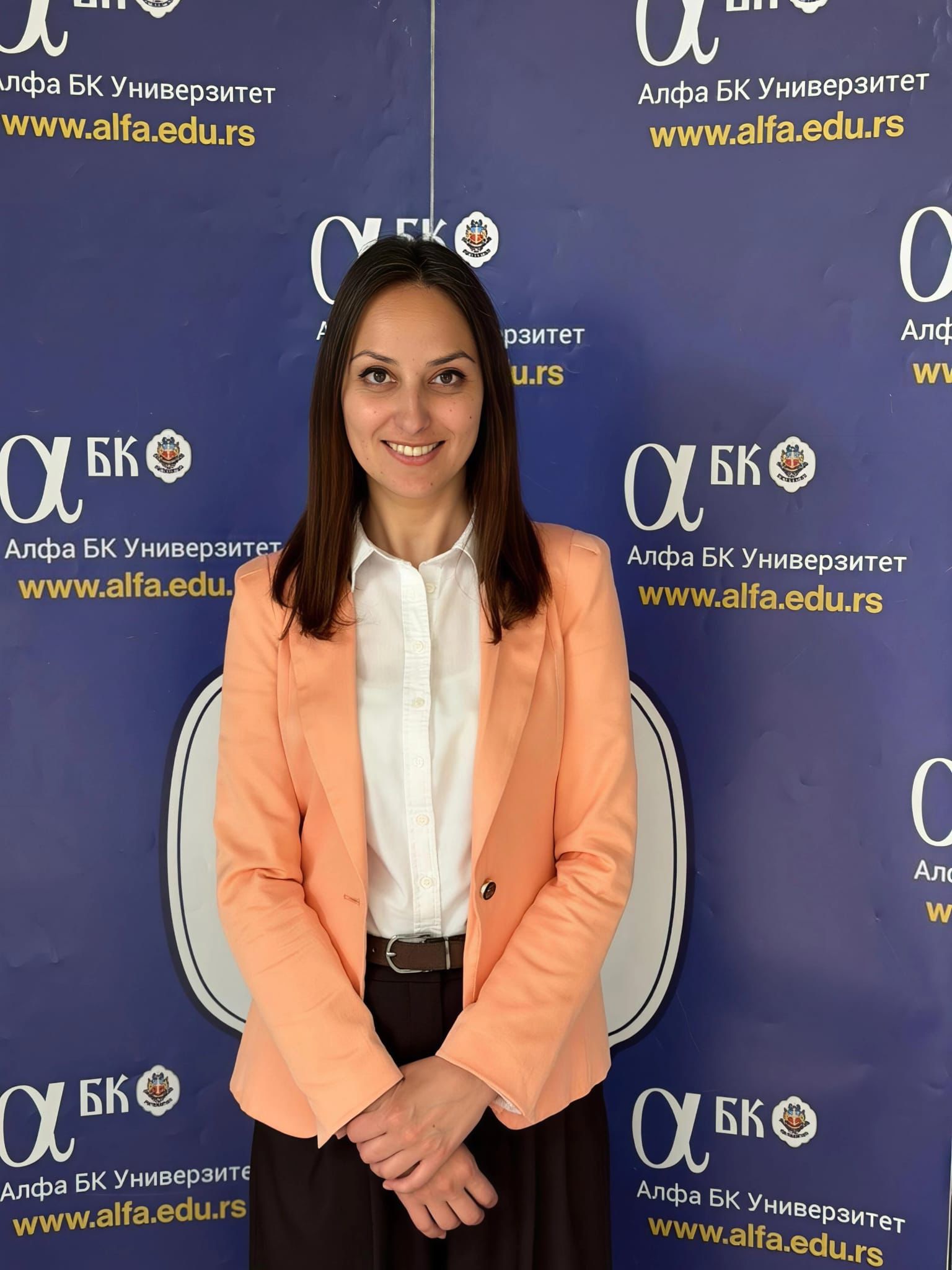
Aleksandra Gajović
Docent • Repozitorijum radova
Bibliografske reference
Publikacije i radovi autora prikazani su u kompaktnim karticama.
Digital Environmental Education: A Model Connecting Stakeholder Engagement with Sustainable Development Goals and European Green Deal
MonografijaScientific-professional Society for Disaster Risk Management, Belgrade
Digital Environmental Education: A Model Connecting Stakeholder Engagement with Sustainable Development Goals and European Green Deal
Gajović A., Cvetković M., V.
2026
—
—
—
—
—
—
Monografija je navedena u dostavljenim referencama bez dodatnog apstrakta, DOI-ja i linka.
—
Monografija
Veštačka inteligencija u predikciji emisija i ekoloških incidenata u IPPC postrojenjima: Rudnik Bor kao studija slučaja
M63Deveti naučno-stručni skup “Stanje i zaštita životne sredine-multidisciplinarni pristup”, Univerzitet Union, Nikola Tesla, Beograd
Veštačka inteligencija u predikciji emisija i ekoloških incidenata u IPPC postrojenjima: Rudnik Bor kao studija slučaja
Gajović Aleksandra, Cvetković Vladimir, Milenković Dalibor
2026
inpress
inpress
—
inpress
inpress
inpress
Rudarski kompleks Bor predstavlja jedno od najznačajnijih industrijskih postrojenja u Srbiji, koje karakteriše dugogodišnja intenzivna rudarsko-metalurška aktivnost i značajan uticaj na lokalni kvalitet vazduha i bezbednost životne sredine. Kao IPPC postrojenje, ovaj kompleks podleže strogim regulatornim zahtevima u vezi sa integrisanom prevencijom i kontrolom zagađenja, kontinuiranim monitoringom emisija i upravljanjem rizicima. Međutim, tradicionalni sistemi monitoringa emisija sumpor-dioksida (SO₂), suspendovanih čestica (PM10 i PM2.5) i teških metala — koji se uglavnom zasnivaju na reaktivnom merenju i izveštavanju nakon nastanka incidenta — pokazali su ograničenu efikasnost u sprečavanju ekoloških incidenata i ponovljenih prekoračenja propisanih graničnih vrednosti. Učestale epizode povišenog zagađenja ukazuju na potrebu za naprednijim, prediktivnim i preventivnim pristupima upravljanju životnom sredinom. Ovaj rad ispituje ulogu digitalnih tehnologija i veštačke inteligencije (AI) u unapređenju predikcije emisija i ranog otkrivanja ekoloških incidenata u IPPC postrojenjima, pri čemu je rudarski kompleks Bor analiziran kao reprezentativna studija slučaja. Istraživanje se zasniva na analizi javno dostupnih skupova podataka dobijenih iz državnih sistema monitoringa životne sredine, univerzitetskih mernih serija i real-time platformi za praćenje indeksa kvaliteta vazduha (AQI). Ovi podaci obezbeđuju dugoročne i visokofrekventne vremenske serije pogodne za naprednu analitičku obradu. U radu se razmatra primena AI metoda, uključujući analizu vremenskih serija i prediktivne algoritme kao što su neuronske mreže tipa Long Short-Term Memory (LSTM), u cilju prognoziranja trendova emisija i identifikovanja uslova koji mogu dovesti do ekoloških incidenata. Rezultati ukazuju da AI-podržani modeli mogu značajno unaprediti kapacitete za rano upozoravanje, procenu rizika i podršku odlučivanju, omogućavajući prelazak sa reaktivne usklađenosti ka proaktivnoj zaštiti životne sredine. Pored kontrole emisija, predloženi pristup doprinosi unapređenju ekološke bezbednosti, zaštiti javnog zdravlja i povećanju.
veštačka inteligencija; emisije; ekološki incidenti; IPPC postrojenja; Rudnik Bor; prediktivni modeli
M63
Nanotehnologije: Izazovi u borbi protiv klimatskih promena
M63Deveti naučno-stručni skup “Stanje i zaštita životne sredine-multidisciplinarni pristup”, Univerzitet Union, Nikola Tesla, Beograd
Nanotehnologije: Izazovi u borbi protiv klimatskih promena
Milenković Dalibor, Cvetković Vladimir, Gajović Aleksandra
2026
inpress
inpress
—
inpress
inpress
inpress
Klimatske promene predstavljaju sistemski rizik koji istovremeno pogađa prirodne ekosisteme, ekonomiju i javno zdravlje, a efekti se ispoljavaju kroz češće i intenzivnije ekstremne vremenske događaje, degradaciju resursa i narušavanje bezbednosti hrane i vode. Ublažavanje klimatskih promena zahteva brzo smanjenje emisija gasova sa efektom staklene bašte, dok adaptacija podrazumeva prilagođavanje infrastrukture, proizvodnih sistema i javnih usluga novim klimatskim uslovima. U tom kontekstu, nanotehnologija se izdvaja kao horizontalna tehnološka platforma koja omogućava razvoj materijala i uređaja sa poboljšanim funkcionalnim svojstvima. Rad sintetiše relevantna saznanja o potencijalu nanotehnologije u oblastima hvatanja, skladištenja i konverzije ugljen-dioksida, povećanja energetske efikasnosti, razvoja naprednih solarnih ćelija i elektrohemijskog skladištenja energije, kao i u održivoj poljoprivredi, tretmanu vode i monitoringu životne sredine. Posebno se naglašava da su očekivani dobici često uslovljeni integracijom rešenja u celokupan proces, jer se koristi mogu anulirati visokim energetskim i materijalnim zahtevima proizvodnje. Dodatno, rad ukazuje na ključne izazove u domenu bezbednosti nanomaterijala, uključujući toksikološku neizvesnost, potencijalne uticaje na ekosisteme, ograničenja dostupnih empirijskih podataka i potrebu za standardizacijom, transparentnošću i regulatornim okvirom zasnovanim na dokazima. Zaključuje se da nanotehnologija može biti značajan deo portfolija rešenja za klimatsku akciju, ali samo uz odgovorne principe razvoja, validiranje performansi u realnim uslovima i sistematsku procenu rizika. Praktična primena, međutim, zahteva da se klimatske koristi kvantifikuju merljivim pokazateljima i da se uporede sa potencijalnim neželjenim efektima.
nanotehnologija; klimatske promene; ublažavanje; adaptacija; procena rizika; održivi razvoj
M63
Digital Platform for Ecological Education of Students – Advancing the United Nations Sustainable Development Goals and the European Green Deal: The Case of ProSafeNet (Global Hub)
M24International Journal of Disaster Risk Management
Digital Platform for Ecological Education of Students – Advancing the United Nations Sustainable Development Goals and the European Green Deal: The Case of ProSafeNet (Global Hub)
Gajović, A., Cvetković, V. M., Renner, R., & Milašinović, S.
2025
Vol. 7, No. 2
—
—
263-278
Achieving the United Nations Sustainable Development Goals (SDGs) and the European Green Deal (EGD) requires more efficient pathways that connect learning directly to real-world actions. This review introduces and explores a student-centered digital platform for ecological education that encourages knowledge sharing, collaboration, and practical implementation. Using a mixed-methods approach, we gather insights from existing literature and policies on SDGs and EGD to define core functional and governance requirements, which are then integrated into the ProSafeNet platform (the global hub for safety, security, risk, and emergency professionals and scientists). Its architecture brings together curated environmental issues across global, national, and causal layers; structured learning modules aligned with SDG/EGD guidelines; an embedded legal framework at various levels; and networking channels that guide students from identifying problems to developing solutions, culminating in standardized Project Solution Models. In the case study of ProSafeNet, these pathways leverage existing modules such as the Knowledge Base, Training Hub, Events/Forum, Projects, Research Hub, Community Resilience Hub, Policy Practice Lab, and Innovation Lab—allowing immediate testing without additional infrastructure. An evaluation framework is proposed, featuring key performance indicators such as learning gains, student engagement, team formation, prototypes or pilots, policy briefs, and progress toward SDGs/EGDs. The framework also highlights the importance of equity, accessibility, and GDPR-compliant governance. This approach aims to address the issue of “brain drain” by providing visible, credentialed pathways into green practices and funding opportunities, while fostering collaboration across institutions. Overall, this model offers a practical, scalable solution to accelerate student involvement in ecological problem-solving and support measurable progress toward SDG and EGD objectives.
Ecological education; sustainable development; digital platform; informal learning; ProSafeNet; student engagement; knowledge sharing; green innovation; policy integration; collaboration
M24
Advancing the Circular Economy through Construction and Demolition Waste Management for Disaster Risk-Informed Practice: Comparative Insights from Serbia and the European Union
M54International Journal of Contemporary Security Studies
Advancing the Circular Economy through Construction and Demolition Waste Management for Disaster Risk-Informed Practice: Comparative Insights from Serbia and the European Union
Aleksandra Gajović, Vladimir M. Cvetković, Renate Renner, Vanja D. Cvetković
2025
Vol. 1 / No. 2
—
—
51-65
Construction and demolition waste is a pivotal lever for operationalizing the circular economy in the built environment, yet implementation remains uneven across Europe. This study provides a comparative overview of Serbia and EU countries using harmonized survey data from the European Demolition Association. We analyze company profiles, revenue structures, and activity mixes across demolition, decontamination, and waste-management value chains. Serbia’s firms exhibit limited uptake of the circular economy: 69% report <25% of revenue from demolition activities, whereas 45% of EU firms derive >75% of revenue from demolition. In waste management (sorting/transport/recycling), 80% of Serbian companies earn <10% of revenue, compared with 33% in the EU; decontamination revenues show a similar gap (Serbia: 80% <10% vs. EU: 38% <10%). Although Serbian contractors show signs of maturation (50% medium and 13% significant by 2019 self-classification), activity remains concentrated outside high-value circular economy loops, and subcontracting shares remain skewed toward low-complexity segments. These findings suggest untapped potential for advancing the circular economy through targeted policy instruments (e.g., incentives for on-site sorting and secondary-materials markets), workforce training and certification, and digital traceability of construction and demolition waste flows. Strengthening these enablers could accelerate alignment with EU circular-economy objectives, reduce primary-resource use, and improve environmental and public-health outcomes in Serbia’s construction sector. Limitations include reliance on 2018 activity data and partial market coverage; future work should integrate newer waves and administrative datasets to track policy impacts over time.
Circular economy; waste; resource efficiency; waste management; recycling; environmental protection; sustainable development; disaster risk management; resilience; Serbia; European Union
M54
The potential for development of green information and communication channels
M33International Virtual Academic Conference Education and Social Sciences Business and Economics, International Academic Institute, University of Vienna, Austria
The potential for development of green information and communication channels
Gajović, A., Srebro, B., Ibrulj, V., Radović, B.
2024
—
2671-3179
—
—
74-77
This paper analyzes the application of the Internet of Things (IoT) in education, the public sector, and the economy. IoT enables inter-device communication and data collection, offering numerous benefits, including improved education, sustainability, and economic advantages. Models of IoT platforms have been considered for implementation in medical education and other fields. Education is crucial for the development of sustainable practices, and IoT stands out as a tool that can assist in environmental education. Gamified learning, digital content, and remote access are components of modern education supported by IoT. IoT also provides benefits for the public sector and the economy, enabling more efficient decision-making and data monitoring.
IoT, green ICT, education for the environment
M33
Digitalization of the European Green Deal (EGD) and Sustainable Development Goals (SDG) - A factor in empowering sustainable local projects: A review of literature and potential achievements
M3312 INTERNATIONAL SYMPOSIUM, “New Paradigms in the Economy: Connectivity, Innovation and Sustainability”
Digitalization of the European Green Deal (EGD) and Sustainable Development Goals (SDG) - A factor in empowering sustainable local projects: A review of literature and potential achievements
Gajović Aleksandra
2024
Vol. 2 / No. 1
—
—
129-146
The Sustainable Development Goals and the European Green Deal are calls to action for countries around the world, and especially for the member states of the European Union, to address and practically solve many common problems. When discussing the European Green Deal (EGD) in particular, these problems are predominantly ecological in nature. The goal of decarbonization is closely linked to the structure of the economy, and to properly implement the provisions of greening the economy, proper education is necessary. For mass education, the use of IoT is a step towards the digitalization of education, project and other networking, as well as harmonious innovations on the path to sustainability. To highlight the importance and interdependence of these areas, the paper presents a systematic review of the literature on these fields.
sustainable development, European Green Deal, IoT, education, eco-entrepreneurship
M33
Educating youth on project sustainability - project engagement and recognition of the Green Deal
M23Applied Ecology and Environmental Research
Educating youth on project sustainability - project engagement and recognition of the Green Deal
Gajović Aleksandra, Bjelica Dragan, Pavlović Dejana, Vukmirović Dragan
2023
Vol. 1, no. 1/2 (2003)-
ISSN 1589-1623 (Print), ISSN 1785-0037 (Online), ISSN-L 1589-1623
—
2969-2989
The European Green Deal is a blueprint for a more sustainable life throughout the European Union and its member states. It is based on environmental protection and sensible consumption. However, implementing Green Deal policies necessitates the participation of local populations who are affected by pollution. This paper presents the significance that youth hold in contributing to the implementation and development of the European Green Deal and the circular economy as well as the key role they play in local self-government in order that the aims of the European Green Deal be achieved. To do so, three pilot studies (29 youth were engaged) and one comprehensive research (201 youth were engaged) were conducted on university and secondary school students in Republic of Serbia in 2022. Based on these, youth were found to not possess environmentally friendly habits, as well as adequate education on sustainability challenges. Theoretical and practical implication has been discussed.
youth ecology knowledge, environmental protection, ecology habits, circular economy
M23
Analiza stanja i izazovi prerađivačke industrije kroz 7S model
M53TEHNIKA – MENADŽMENT
Analiza stanja i izazovi prerađivačke industrije kroz 7S model
Gajović Aleksandra
2022
71/6
0040-2176
—
761-766
U radu su analizirani poslovanje i potencijali unapređenja poslovanja malog prerađivačkog preduzeća kroz McKinsey 7S model. U prvom delu rada prikazan je pregled literature iz ove oblasti. U drugom delu rada prikazana je metodologija. U trećem delu rada analizirane su sve tačke 7S modela (strategija, struktura, sistemi, zajedničke vrednosti, stil upravljanja, zaposleni, veštine) u malom prerađivačkom preduzeću. Na kraju je dat zaključak uz predloge za unapređenje. Rad pokazuje da McKinsey 7S model može biti primenjen u svim oblicima preduzeća i pruža pregled trenutnog stanja uz uvid kritičnih tačaka koje treba unaprediti.
McKinsey 7S model, analiza poslovanja, prerađivačko preduzeće, strategija, unapređenje
M53
Pametni gradovi kao budućnost i doprinos zelenom dogovoru
M33XIV Naučno-stručni skup sa međunarodnim učešćem „Pametni gradovi i integracija tehnologija četvrte industrijske revolucije 4.0“. Udruženje inženjera Beograda
Pametni gradovi kao budućnost i doprinos zelenom dogovoru
Gajović Aleksandra, Lubura Babić Tijana
2022
—
—
978-86-904328-0-6
—
34-42
—
Паметни градови (Smart citites) као једанаести циљ Одрживог развоја, будућност су одрживог развоја целог Света, не само Републике Србије. Њихов развој заузима посебну улогу у квалитету и здрављу живота и животне средине појединца као њиховог становника. На који начин јединице локалних самоуправа могу одговорити својим надлежностима када је у питању спровођење законских регулатива, уз помоћ сарадње са Сталном конференцијом градова и општина (СКГО), а који сектори поред урбанизма, уређења јавних површина имају значајну улогу у пројектовању, уређењу и модернизацији инфраструктуре. Са друге тачке гледишта, на који начин могу утицати на становништво у еколошком освешћивању, с обзиром да су ове заинтересоване групе нераздвојиве и имају обострани утицај. У раду је постављено главно истраживачко питање, а то је колико јединице локалних самоуправа оваквим пословањем доприносе задацима Зеленог договора (Green deal), смањењу загађења и очувању природних ресурса, а колико становник као појединац.
паметни градови, јавно здравље, укључивање становништва
M33