
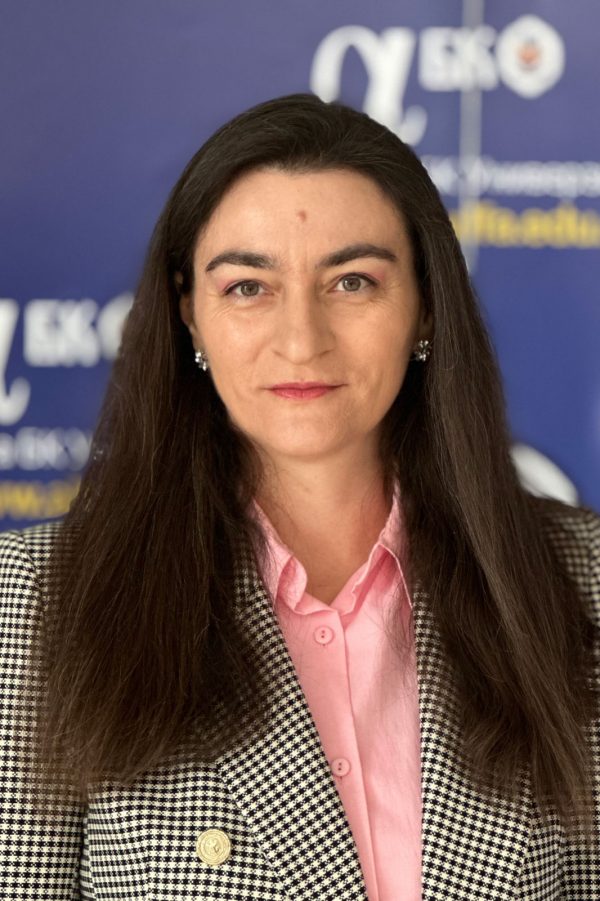
Drinka Peković
Repozitorijum radova • Bibliografske reference
Bibliografske reference
Publikacije i radovi autora prikazani su u kompaktnim karticama.
Impact of migrant remittances to post-transition countries on self-employment
M22Economics and Sociology
Impact of migrant remittances to post-transition countries on self-employment
Drinka Peković
2026
19(1)
ISSN 2306-3459 Online, ISSN 2071-789X Print
—
113-124
The objective of this paper is to examine the impact of remittances on self-employment rates in posttransition countries, with a particular focus on the difference in remittance effects between male and female self-employment rates. This paper uses panel data analysis to examine a sample of 25 countries over the period from 2008 to 2022. The remittance effects are estimated through the application of the System GMM approach. The findings indicate that remittance inflows have a positive and statistically significant impact on the self-employment rate. Specifically, a 10 percent increase in remittances per capita has been shown to increase the total self-employment rate by 0.08 and the female selfemployment rate by 0.12 percent. By contrast, though remittance inflows contribute to an increase in the male self-employment rate, this effect is statistically insignificant. Analysis by region reveals that remittances support self-employment activities in SEE and CIS countries; however, remittance effects are negative in the Central and Eastern European - EU member states. Thus, the findings of this study suggest that remittance-receiving countries should devise effective measures for unconstrained remittance flows and remittance channeling into entrepreneurial activities.
remittances, self-employment rate, post-transition countries, GMM approach, entrepreneurship
M22
The impact of investments in permanent assets on the increase in the number of employees and their salaries by entrepreneurial sectors
M53Revizor
The impact of investments in permanent assets on the increase in the number of employees and their salaries by entrepreneurial sectors
Jozefina Beke-Trivunac, Drinka Peković
2021
24(95-96)
(Štampano izd.) 1450-7005; (Online) 2620-1461
—
7-16
This work aimed to identify the impact of investments in permanent assets on the number of employees by sector and its impact on employee salaries. We draw the data from the Financial Statements Annual Bulletin published by the Serbian Business Registers Agency, representing aggregated data of all enterprises in Serbia and their analysis by sectors. The data set spans the period from 2013 to 2020. The results show a high positive correlation between investment in permanent assets and the number of employees in the manufacturing sector and information and communication sector, and a negative one in the agricultural industry. We did not find a significant correlation between investments in permanent assets and the number of employees with their salaries.
marginal investments; marginal number of employees; entrepreneurial sector; Serbia.
M53
Investment in fixed assets impact on the employment growth in the Republic of Serbia
M53Revizor
Investment in fixed assets impact on the employment growth in the Republic of Serbia
Jozefina Beke-Trivunac, Bojan Stoiljković, Drinka Peković
2021
24(94)
(Štampano izd.) 1450-7005; (Online) 2620-1461
—
17-23
This study focused on the effect of investments in fixed assets on the employment growth in Serbia during the period from 2013 to 2020. The data are drawn from the publicly available data of the Serbian Business Register Agency and include all registered companies in the country which submit-ted their annual reports. The results show the high correlation between yearly investment in fixed assets and employment growth. We also concluded that the average annual investment in fixed assets grows from year to year, making the opening of a new workplace each year more expensive.
Average annual investment in fixed assets, average annual increse in the number of employees, cost of job creation.
M53
Initial impact of Covid-19 crisis on employment and fiscal policy responses
M33Proceedings Book from First International Scientific Conference “Covid-19 and Challenges of the Business World” Belgrade
Initial impact of Covid-19 crisis on employment and fiscal policy responses
Drinka Peković, Lidija Madžar
2021
—
—
978-86-6461-046-9
—
166-180
The rapid spread of the Covid-19 virus has forced the governments of most countries to introduce restricted movement and social distancing measures from March 2020. Restricted movement measures have led to a decrease in the production of goods and services and a sharp decline in most economic indicators. The new circumstances caused by the pandemic hit the wholesale and retail trade, accommodation and food services, transport, and some manufacturing sectors the hardest. This paper examines the impact of the COVID-19 pandemic on employment indicators in Serbia, compared to changes in the labour market of other Western Balkan countries. The Covid-19 crisis has halted the upward trend in employment rates in recent years in most Western Balkan countries. However, the employment rate remained relatively stable because of fiscal policy measures aimed at retaining or creating jobs and supporting firms" liquidity. Fiscal measures have contributed to the maintaining or even increase the number of formally employed. At the same time, the number of informally employed decreased significantly. The largest changes in employment indicators have been in the second quarter of 2020. The effects of the Covid-19 crisis had the largest impact on vulnerable groups of employees, particularly on the reduction of informal employment, part-time employment rate and number of temporary employees. In the second quarter of 2020, the growth of the number of employees absents from work and those who work from home was significant, as well as the growth of working hours lost. Fiscal measures have enabled short-term relative stability of labor market indicators. However, the long-term impact of the COVID-19 crisis on the labor market will depend on the recovery of the Serbian economy, but also of the economy its main foreign trade partners.
Covid-19 crisis, fiscal measures, part-time employment,temporary employment, Western Balkan
M33
Energy transition in Serbia and the world in the era of Covid-19 pandemic
M33Proceedings Book from First International Scientific Conference “Covid-19 and Challenges of the Business World” Belgrade
Energy transition in Serbia and the world in the era of Covid-19 pandemic
Lidija Madžar, Drinka Peković
2021
—
—
978-86-6461-046-9
—
151-165
Energy and energy resources are of great importance in the contemporary technologically sophisticated economy, digitalized society, and the era of knowledge economy. Namely, energy is an area of special importance for the entire economy and society because a stable, sustainable, modern, secure and well-functioning energy sector contributes to the well-being of the entire economy and society. Today, special emphasis is placed on the use of cleaner and more sustainable energy with the aim of improving energy security, as well as environmental protection. In that sense, the importance of the energy transition comes to the fore, which means the transition of the energy system from the use of fossil fuels to the energy production and consumption based on renewables. The increasing penetration of renewable energy into the energy supply mix, the beginning of the mass electrification process, and improvements in energy storage systems are the key drivers of this process. This paper deals with the analysis of current trends in energy transition in the world, monitoring its situation in Serbia, as well as considering the impact of the coronavirus pandemic COVID-19 on the direction, and intensity of its current trends. Although the current wave of energy transition is largely driven by concerns about environmental sustainability, and the global economy, global energy supply remains extremely carbon-intensive. The COVID-19 coronavirus pandemic has led to new challenges in this area, as well as a significant and unforeseen decline in global GHG emissions. However, unlike the situation in the world, the pandemic did not significantly affect the energy transition in Serbia, where this process is still in its infancy. Although Serbia has great potentials in renewable energy sources that could largely replace the use of coal, conservativism and the strong mining lobby dominate Serbian society, which could significantly jeopardize this process. Key words: electricity, energetics, energy transition, fossil fuels,
electricity, energetics, energy transition, fossil fuels, renewable energy sources.
M33